


India’s Latest Inflation Rate Drops to 3.21% in Feb 2026: CPI, Food & Housing Trends Explained
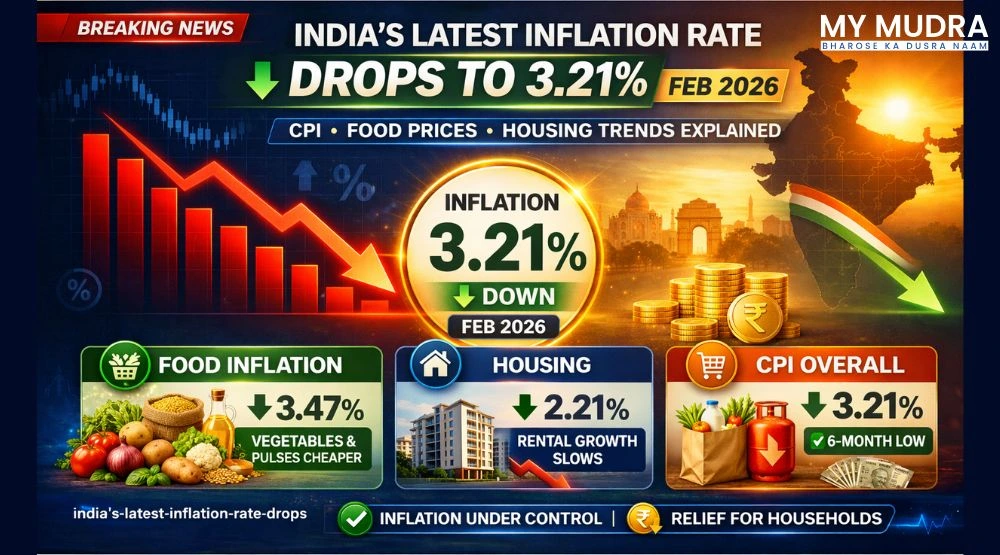
India’s retail inflation eased to 3.21% in February 2026, according to the latest data released by the Ministry of Statistics and Programme Implementation (MoSPI). Food inflation stood at 3.47%, while housing inflation was recorded at 2.21%, indicating a stable and moderate inflation environment in the country.
Key Highlights
1. CPI Inflation: 3.21% (Feb 2026 vs Feb 2025)
2. Food Inflation (CFPI): 3.47%
3. Housing Inflation: 2.21%
4. Inflation remains within a moderate and controlled range
What is Inflation?
Inflation refers to the rise in prices of goods and services over time, which reduces the purchasing power of money. In simple terms, as inflation increases, the cost of living also rises.
How is Inflation Measured in India?
In India, inflation is primarily measured using:
1. Consumer Price Index (CPI): Tracks retail inflation faced by consumers
2. Wholesale Price Index (WPI): Measures price changes at the producer level
Globally, tools like the GDP deflator are also used to assess inflation trends.
Who Releases Inflation Data in India?
1. CPI Data: Released monthly by the National Statistical Office (NSO) under MoSPI
2. WPI Data: Released by the Office of the Economic Advisor under DPIIT
Why Moderate Inflation is Important for Growth
A moderate level of inflation is considered healthy for the economy because it:
1. Encourages consumer spending
2. Boosts demand for goods and services
3. Supports production and business expansion
4. Drives overall economic growth
Current Insight: India’s inflation trend in early 2026 reflects a balanced and stable economic environment.
Impact of High Inflation on the Economy
While moderate inflation is beneficial, high inflation can negatively impact the economy:
1. Reduces purchasing power of consumers
2. Increases loan interest rates and borrowing costs
3. Affects low-income households the most
4. Decreases the real value of savings
5. Creates uncertainty for businesses and investors
What This Means for You
For consumers and borrowers, stable inflation is a positive sign:
1. Loan Interest Rates: Likely to remain stable
2. EMIs: More predictable and manageable
3. Cost of Living: Controlled price rise
4. Financial Planning: Easier budgeting and decision-making
Key Terms Explained
- CPI: Consumer Price Index
- CFPI: Consumer Food Price Index
- WPI: Wholesale Price Index
- FDI: Foreign Direct Investment
- GDP: Gross Domestic Product
- NSO: National Statistical Office
- DPIIT: Department for Promotion of Industry and Internal Trade
Conclusion
India’s inflation rate for February 2026 indicates a moderate and stable economic trend, which is beneficial for both consumers and businesses. However, individuals should continue monitoring inflation as it directly impacts loan affordability, EMIs, and overall cost of living.
FAQs
Q1. What is the current inflation rate in India (Feb 2026)?
India’s CPI-based inflation rate for February 2026 is 3.21%.
Q2. What is CPI inflation?
CPI (Consumer Price Index) measures the change in prices of goods and services consumed by households.
Q3. Is 3.21% inflation good or bad?
It is considered moderate and healthy, supporting economic growth without significantly increasing costs.
Q4. Who releases inflation data in India?
CPI data is released by NSO under MoSPI, while WPI data is released by DPIIT.
Sources: PIB | Hindustan Times